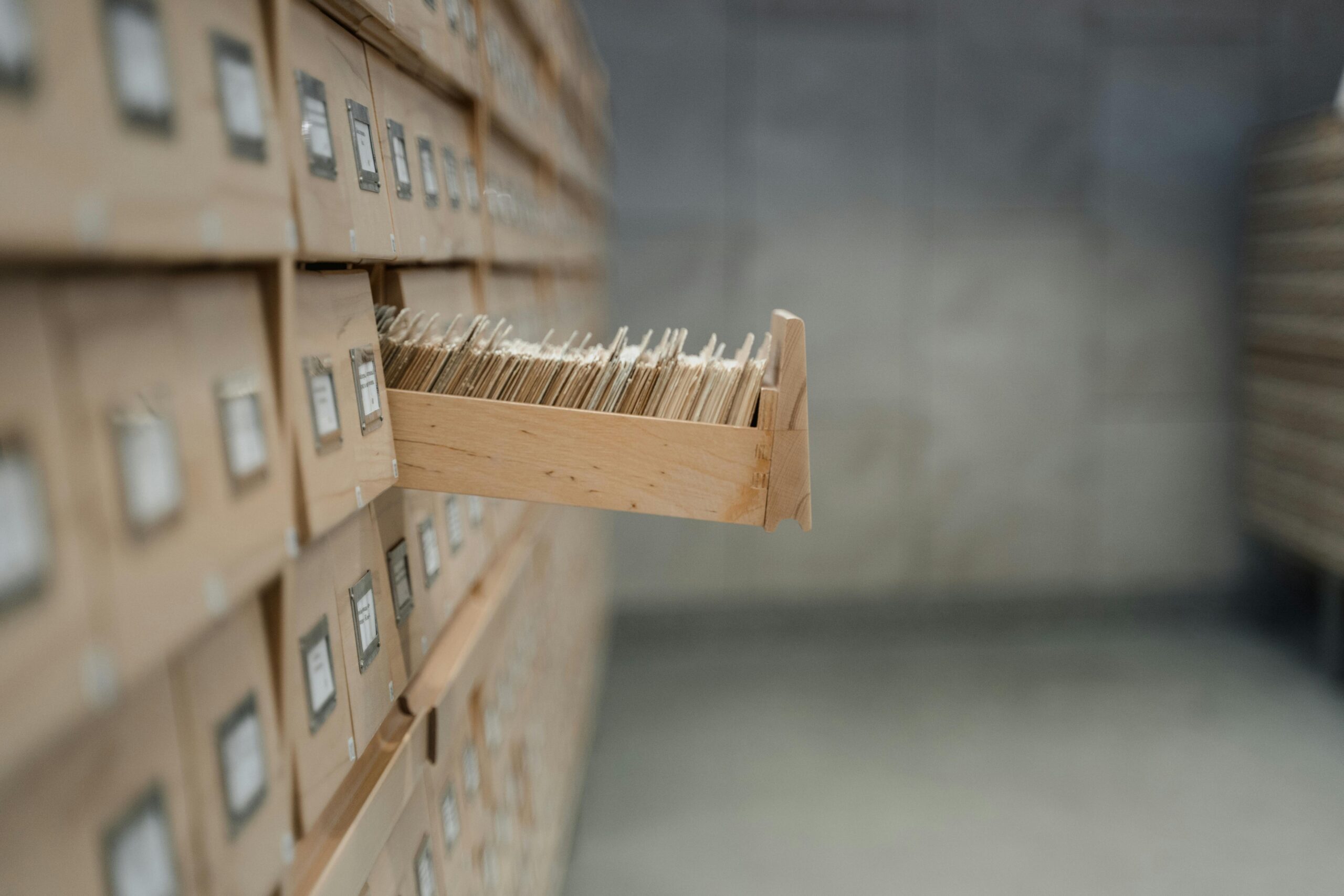
Archival metadata review combines traditional historical research with modern technology to unlock centuries of hidden knowledge and transform how we access, preserve, and understand our collective past.

🔍 The Foundation: Understanding Archival Metadata in the Digital Age
Archives have always been the guardians of human history, preserving documents, photographs, recordings, and artifacts that tell the stories of our past. However, the sheer volume of historical materials accumulated over centuries presents a significant challenge: how do we find what we need in this vast sea of information?
Metadata—quite literally “data about data”—serves as the critical bridge between historical materials and those who seek to understand them. In archival contexts, metadata encompasses descriptive information such as dates, authors, subjects, formats, provenance, and contextual relationships that help researchers navigate collections efficiently.
The process of archival metadata review involves systematically examining, validating, enriching, and standardizing these descriptive elements to ensure accuracy, consistency, and accessibility. This meticulous work transforms disorganized historical materials into searchable, discoverable resources that serve scholars, genealogists, journalists, and curious minds worldwide.
The Science Behind Metadata Standards and Frameworks
Effective archival metadata review relies on established standards that provide structure and consistency across institutions. Professional archivists utilize several key frameworks that have evolved over decades of collaborative development.
International Standards That Shape Modern Archives
The International Council on Archives developed ISAD(G)—the General International Standard Archival Description—which provides a framework for describing archival materials regardless of format or carrier. This standard emphasizes the importance of context, provenance, and hierarchical relationships within collections.
Similarly, Encoded Archival Description (EAD) offers an XML-based standard that enables archival finding aids to be encoded, indexed, and accessed online. EAD has revolutionized how archives present their holdings to digital audiences, transforming static paper guides into interactive, searchable resources.
Dublin Core, another fundamental standard, provides a simplified metadata element set that facilitates cross-domain information resource description. Its fifteen core elements—including title, creator, subject, and date—offer flexibility while maintaining interoperability across different systems.
Controlled Vocabularies and Authority Control
Consistent terminology forms the backbone of effective metadata. Controlled vocabularies such as the Library of Congress Subject Headings (LCSH), the Getty Art & Architecture Thesaurus, and the Social Networks and Archival Context (SNAC) project ensure that similar concepts receive identical descriptive terms across collections.
Authority control maintains consistency in how names, places, and subjects are recorded. When a historical figure’s name appears in various forms throughout different documents, authority control links these variations to a single established heading, dramatically improving discoverability.
🎨 The Art: Human Expertise in Historical Context
While standards and systems provide essential structure, archival metadata review remains fundamentally a human endeavor requiring expertise, judgment, and contextual understanding that no algorithm can fully replicate.
Interpreting Historical Handwriting and Language
Professional archivists often encounter documents written in obsolete scripts, historical language forms, or deteriorated conditions. Reading eighteenth-century handwriting, deciphering abbreviations unique to specific time periods, or understanding historical terminology requires specialized paleographic skills developed through years of training and practice.
For instance, the long “s” (ſ) common in documents before 1800 can confuse modern readers, potentially leading to transcription errors. Similarly, Latin phrases, archaic legal terminology, and regional dialect variations demand linguistic expertise to interpret accurately.
Understanding Provenance and Historical Context
Archival materials derive much of their meaning from their original context—who created them, why, for whom, and under what circumstances. Metadata reviewers must research the historical background of collections, understand organizational structures of past institutions, and recognize relationships between documents that might not be immediately apparent.
This contextual understanding transforms simple descriptive cataloging into rich narrative frameworks that help researchers comprehend not just what documents say, but what they mean within their historical moment.
Modern Technology Transforming Traditional Practice
The digital revolution has fundamentally altered archival metadata review, introducing powerful tools that augment human expertise and expand access to historical materials on an unprecedented scale.
Optical Character Recognition and Handwriting Recognition
Advanced OCR technology can now process printed historical documents with remarkable accuracy, automatically generating searchable text from scanned images. Handwritten Text Recognition (HTR) systems, powered by machine learning, are increasingly capable of transcribing historical handwriting, though human review remains essential for quality control.
These technologies dramatically accelerate the creation of full-text searchable archives, allowing researchers to find specific phrases or concepts within millions of pages that would otherwise require manual examination.
Artificial Intelligence in Metadata Enhancement
Machine learning algorithms can now identify patterns, suggest subject headings, detect named entities (people, places, organizations), and even recognize faces in historical photographs. These AI-assisted processes don’t replace human judgment but rather enhance productivity by handling repetitive tasks and flagging items requiring expert attention.
Natural language processing analyzes document content to automatically generate descriptive metadata, while computer vision technologies classify images by format, subject matter, and visual characteristics.
Linked Open Data and Semantic Web Technologies
Modern archival metadata increasingly embraces linked data principles, creating connections between related resources across institutional boundaries. By using URIs (Uniform Resource Identifiers) and RDF (Resource Description Framework), archives can link their collections to external authority files, biographical databases, and geographic information systems.
This interconnected web of data enables researchers to discover relationships and connections that would be impossible to identify within isolated collections, creating new research opportunities and historical insights.
📚 Practical Methodology: The Review Process Step by Step
Conducting effective archival metadata review requires systematic methodology that balances efficiency with thoroughness.
Initial Assessment and Planning
Review projects begin with comprehensive assessment of existing metadata quality, identifying inconsistencies, gaps, and errors. Archivists examine sample records to understand the scope of work required and develop project specifications including standards to be applied, fields to be reviewed, and quality benchmarks.
This planning phase establishes priorities based on collection significance, researcher demand, and preservation concerns, ensuring that limited resources focus on materials offering the greatest value.
Data Validation and Correction
Systematic review examines each metadata element for accuracy and completeness. Date formats receive standardization (transforming variants like “June 5th 1943,” “6/5/43,” and “5.6.43” into consistent ISO format). Name authorities are verified and linked to established headings. Subject terms are evaluated against controlled vocabularies and updated as needed.
Technological tools facilitate this process through batch operations that identify inconsistencies, flag missing required fields, and suggest corrections based on pattern recognition.
Enhancement and Enrichment
Beyond correcting errors, metadata review should enrich descriptions with additional context, links to related materials, biographical notes, and historical background that increases understanding and discoverability.
This enhancement might include adding subject headings for concepts implicit but not explicitly stated in original descriptions, linking documents to relevant digital exhibitions or finding aids, or incorporating user-generated tags and annotations that reflect contemporary research interests.
Quality Control and Testing
Before completing any review project, rigorous quality control processes verify that changes meet established standards and improve discoverability. Sample testing confirms that enhanced metadata actually improves search results and user experience. Peer review by experienced archivists catches errors and ensures consistency.
🌍 Global Collaboration and Crowdsourcing Initiatives
The scale of historical materials requiring metadata review far exceeds the capacity of professional archivists working alone. Innovative institutions have embraced collaborative approaches that harness public interest in history.
Citizen Archivist Programs
Organizations like the U.S. National Archives, the Smithsonian Institution, and numerous academic libraries have developed platforms enabling volunteers to transcribe documents, add tags, and contribute contextual information. These programs democratize archival work while building engaged communities around historical collections.
Successful crowdsourcing requires careful project design, clear instructions, quality review processes, and recognition systems that acknowledge contributor efforts. When properly structured, volunteer contributions can be remarkably accurate and insightful.
International Collaborative Cataloging
Archives with related collections increasingly coordinate metadata creation, sharing authority files, controlled vocabularies, and descriptive standards. These collaborations prevent duplication of effort and ensure consistency across institutions holding materials from the same provenance or covering related subject areas.
Challenges and Considerations in Contemporary Practice
Despite technological advances, archival metadata review faces persistent challenges that require ongoing attention and innovation.
Legacy Data Migration
Many archives possess decades of catalog records created using outdated standards, inconsistent practices, or obsolete systems. Migrating this legacy data into modern platforms while preserving valuable information and correcting historical inconsistencies presents significant technical and intellectual challenges.
Multilingual and Multicultural Materials
Global archives contain materials in hundreds of languages using diverse scripts, cultural contexts, and naming conventions. Creating metadata that respects original cultural contexts while remaining accessible to international researchers requires cultural competency and often multilingual expertise.
Ethical Considerations and Harmful Content
Historical collections inevitably contain materials reflecting the prejudices, biases, and harmful attitudes of past eras. Archivists must balance preservation of historical evidence with ethical responsibility to identify and contextualize offensive content, racist terminology, and colonial perspectives embedded in both original materials and legacy metadata.
Contemporary practice increasingly embraces reparative description that acknowledges these issues, updates harmful terminology, and incorporates perspectives of historically marginalized communities whose stories these materials document.
💡 The Impact: Why Precision Metadata Matters
Investing resources in meticulous metadata review delivers tangible benefits that extend far beyond archival reading rooms.
Accelerating Research and Discovery
Researchers who might once have spent weeks manually examining finding aids can now identify relevant materials in minutes through precise keyword searches. This efficiency doesn’t just save time—it enables entirely new research questions that would be impractical without effective metadata.
Preserving Cultural Heritage
Accurate metadata helps prioritize preservation efforts by identifying materials at risk, documenting current condition, and tracking conservation history. Well-documented collections are more likely to receive necessary preservation attention and funding.
Supporting Education and Public Engagement
Rich metadata enables archives to create digital exhibitions, educational resources, and public programs that bring historical materials to broad audiences. Teachers can find primary sources appropriate for specific curriculum needs. Genealogists can trace family histories. Journalists can uncover forgotten stories relevant to contemporary issues.
Future Horizons: Emerging Trends and Opportunities
The field of archival metadata continues evolving rapidly, with several emerging trends shaping future practice.
Integration with Digital Humanities Research
Computational analysis techniques including text mining, network analysis, and geographic information systems increasingly rely on high-quality metadata. Archives are positioning themselves as partners in digital humanities research by structuring metadata to support these analytical approaches.
Sustainability and Long-Term Access
As digital materials proliferate, metadata plays an essential role in digital preservation strategies. Comprehensive technical metadata documenting file formats, software dependencies, and migration history ensures that future generations can access and understand today’s digital records.
Personalization and User-Centered Design
Next-generation archival systems will leverage metadata to create personalized research experiences, recommending related materials based on user behavior, highlighting connections that align with individual research interests, and adapting interfaces to different user communities.
Building Expertise: Pathways to Professional Practice
For those inspired to contribute to this essential work, multiple pathways lead to expertise in archival metadata review.
Graduate programs in library and information science, archival studies, and digital humanities provide formal education in metadata standards, archival theory, and preservation practice. Professional organizations including the Society of American Archivists offer continuing education workshops, webinars, and certification programs.
Hands-on experience through internships, volunteer positions, and crowdsourcing projects builds practical skills while contributing to real archival projects. Many experienced archivists began their careers as volunteers who discovered passion for this meticulous but deeply rewarding work.
✨ Transforming Historical Access Through Dedicated Practice
Archival metadata review represents far more than technical cataloging—it’s an act of service to past, present, and future. Each carefully reviewed record, each standardized date format, each verified authority heading removes barriers between researchers and the historical evidence they seek.
This work requires patience, attention to detail, and genuine respect for both the materials themselves and the people whose lives they document. It demands technical expertise in evolving standards and systems while never losing sight of the human stories preserved in every collection.
As archives continue their digital transformation, the fundamental importance of precise, thoughtful metadata only increases. The archivists, technologists, and volunteers engaged in this work are quite literally unlocking the past, ensuring that historical materials remain accessible, discoverable, and meaningful for generations to come.
Whether you’re a professional archivist refining catalog records, a developer building discovery systems, a researcher frustrated by inadequate finding aids, or simply someone fascinated by history’s hidden treasures, understanding the art and science of archival metadata review reveals the invisible infrastructure that makes historical research possible in the digital age.